top of page
ANDRÉ MARTINEZ
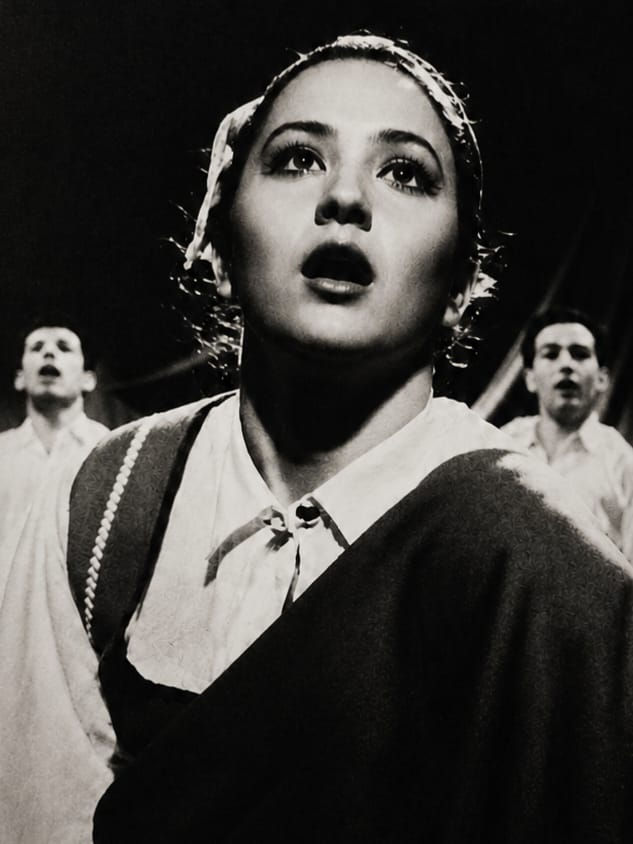
Lusitânia e Brasileirices (Lusitania and Brazilian Ways)
A music, dance and poetry stage work
Brazil/Portugal, 1994, 90 min
Is a country shaped by imagination — or by lived experience?
Lusitânia e Brasileirices begins with this question, bringing Portugal and Brazil into proximity through a shared material — the language — which unfolds into distinct ways of organizing experience.
In the first section, Portugal is approached through Mensagem, by Fernando Pessoa. The poems, set to music, are interwoven with traditional Portuguese songs marked by a persistent sense of melancholy. Language here concentrates and structures time. The dance follows this logic: it draws on recognizable, shared, and transmitted forms — a body inscribed in tradition, carrying collective memory through gesture, grounded in character dance.
In the second section, Brazil is approached through song. Works by Ary Barroso, Noel Rosa, Alcyr Pires Vermelho, David Nasser and Caetano Veloso articulate a repertoire in which the country does not settle into a fixed image, but continually reconfigures itself. The dance responds accordingly, opening space for variation, displacement and incorporation, also grounded in character dance.
The work does not seek resolution. It places in relation two ways of giving form to a country.
On stage, 22 Brazilian and Portuguese performers — artists who sing and dance. The music is performed live by a quartet.
Concept, Artistic and Choreographic Direction: André Martinez
Musical Direction: Adroaldo Cauduro
Choral Arrangements: Adroaldo Cauduro
Instrumental Arrangements: Paulo Dorfman
Musical Direction of the Quartet: Paulo Dorfman
Musical Setting of Poems from Mensagem: Adroaldo Cauduro
Movement Direction: Naira Navroski
Vocal Coaching: Pedro Spohr
Production: Arminda Luz

Cantando o Imaginário do Poeta (Singing the Poet’s Imaginary)
Choral stage work
Brazil, 1994
A stage work conceived for the launch of the book of the same name, with compositions by Adroaldo Cauduro based on the work of the Brazilian poet Mário Quintana.
It begins from a direct approach: bringing Quintana’s poetry into the field of choral singing while preserving its delicacy, light irony and attention to small things. The voices create a shared space of listening in which the poems take on a different presence.
The choral writing is conceived for mixed choir, exploring relationships between timbre, silence and resonance. Originally intended for a cappella performance, the compositions treat the voice as the primary material, allowing the poetry to unfold in a field where word and sound are reconfigured.
The work engages with the Quintanares — brief poetic forms characteristic of Quintana — a territory where everyday life opens onto the unexpected, and where the poet’s gaze transforms the smallest elements into events. The staging operates through synthesis: it reduces gesture and concentrates presence, avoiding illustration and allowing the poetry to emerge through suggestion. It also incorporates elements of animation theatre, in collaboration with Grupo Camaleão, without departing from this logic.
Created with the Choir of the Casa de Cultura Mário Quintana (cultural center), the work premiered at Teatro Bruno Kiefer, in Porto Alegre.
The book Cantando o Imaginário do Poeta became a reference in Brazilian choral music.
Composition and Musical Direction: Adroaldo Cauduro
Texts: Mário Quintana
Script, Scenic Conception and Scenic Direction: André Martinez
Lighting: André Martinez
Animation Theatre: Grupo Camaleão
bottom of page